
Money Plant (Crassula Ovata) Care – How to Care for a Money Plant?
Money plants are among the most eye-catching plants with their unique appearance and story. Often a popular gift for occasions like new homes, offices, or job changes, we've compiled all the details you might be curious about regarding this special flower.
Also known as the lucky plant , the money plant (Crassula ovata) stands out from other plants due to its unique characteristics. Resembling a small tree, it is one of the most popular houseplants. Believed to bring "prosperity, wealth, and abundance," its native habitat is South Africa. This plant, suitable for any setting, is the subject of this article, and you can find more information about it here.
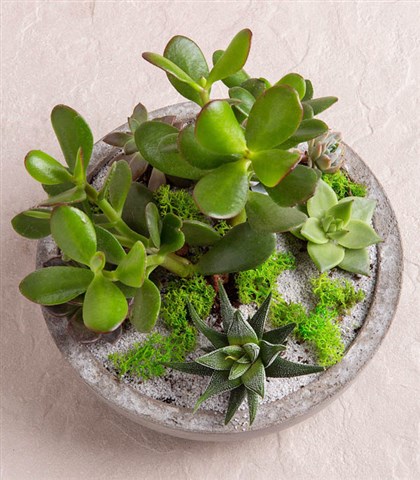
What should be considered when caring for a Money Plant?
Known by various names and considered spiritually valuable by many , the money plant is somewhat challenging to care for . Its effectiveness in bringing abundance and prosperity is only apparent when it is three months old. Therefore, careful attention should be paid to its care for the first three months after planting.
The money tree, notable for its large, plump leaves, is a plant that requires care at temperatures between 15 and 30 degrees Celsius. During the three-month period from planting to the planting stage, certain criteria must be considered. Therefore, to ensure the money tree brings abundance and wealth, the following points should be carefully observed:
- Care should be taken to ensure its location is not affected by adverse conditions such as drafts or winds.
- Choosing the right pot is crucial. For easy and rapid root development, a large and wide pot is important.
- The location should be chosen from places that receive direct sunlight.
- Money tree varieties don't like too much water, so they shouldn't be overwatered. The ideal watering schedule is once a week.
Learning the most accurate information about " how to care for a money plant" will ensure the plant's survival for many years.
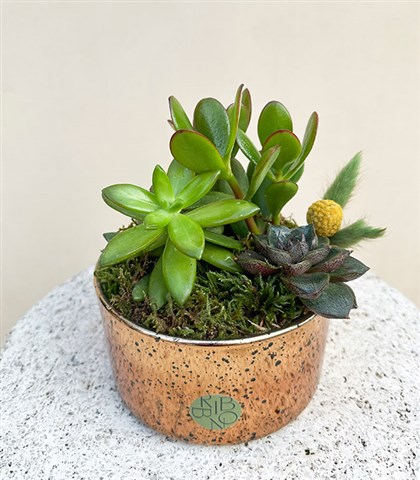
What are the different types of Money Tree Flowers (Crassula)?
Money tree varieties are divided into many types. These types differ from each other in terms of plant height, leaf structure, and growth period. Among the best-known money tree types, some can grow up to approximately 18 meters tall.
Among the varieties that vary depending on their environment, the most popular is the one known as the campfire plant. The flower gets this name from the redness at the tips of its leaves. Although this type is popular, other varieties of money plants also maintain their popularity. Accordingly, the best-known varieties of the crassula plant are as follows:
- Jade,
- Monster, Gollum, Hobbit,
- Finger jede,
- Chinese money flower (pilea)
- Crassula Arborescens Silver Dollar Jade,
- Crassula Ovata Whirly Bird,
- Crassula Ovata Lemon & Lime,
- Crassula Portulacea Minima Mini Jade.
Although these are the most popular types, the Japanese money plant variety known as Pilea Peperomioides is also highly valued.
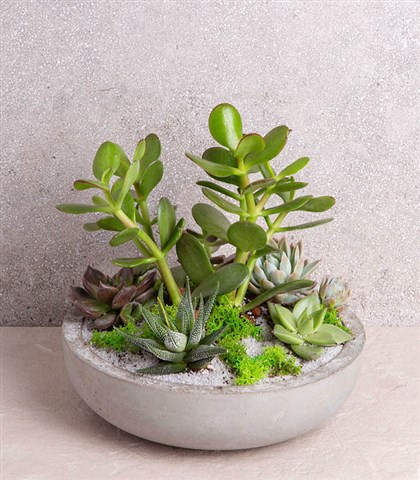
The Story of the Money Tree
Pachira para flower is a famous plant not only in its native South Africa, but all over the world. Moreover, its story is passed down from generation to generation.
According to many legends, at one time, a person who acquired this flower hid money in its soil. Over time, that person's business prospered, and abundance and blessings filled their home. Upon learning of this, many people suddenly wanted to benefit from the miraculous powers of the money flower.
The most widely believed story about the money plant is that, as in Feng Shui philosophy, the plant has a positive influence on living spaces. For many species with braided stems, it is believed that the symbol of prosperity originates from these parts.
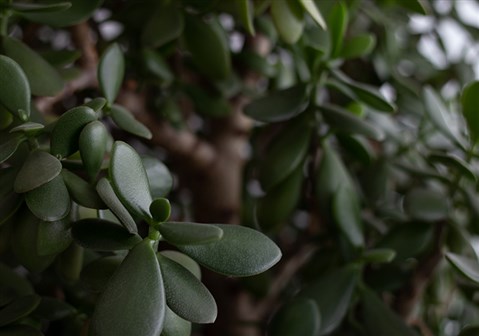
Meaning of Money Flower
The money flower is associated with positive situations and thoughts. Believed to bring good luck and fortune to its surroundings since ancient times, it primarily symbolizes wealth. Thought to bring abundance, plenty of money, and good luck, the flower is also associated with good health.
How to Propagate Money Plants? Money Plant Propagation
For those wondering "How to propagate a money plant?", the first step is to gently remove a few healthy, green leaves from the plant. It's important not to damage the leaf during this process. Place the stem of the leaf in a small container filled with water. Position the stem so that it touches the water and roots develop. Once roots have formed, simply plant the plant in a suitable pot.
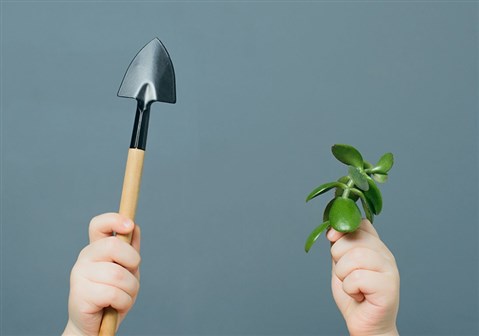
What are the benefits of Money Flower? What is it used for?
Money plants are among the must-have plants due to their numerous benefits . Therefore, let's list the uses of this symbol of wealth: "Money plants" :
- It radiates positive energy.
- Flowering varieties make the setting even more elegant.
- Seven-leaf clover patterns are believed to bring good luck.
- Because it is a plant that does not pose a danger to pets, it can also be a choice for people who own pets.
- It has air purification properties.
- Since it doesn't like too much water, it's also suitable for people who forget to water their flowers.
- It prevents stress and radiation.
Although there are many legends surrounding the money plant, it is also one of the elegant plants in terms of appearance.
How to Plant a Money Plant?
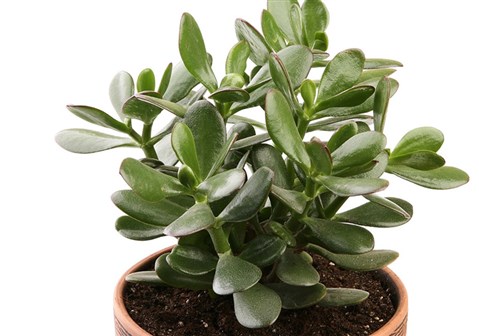
When answering the question " How to plant a money plant?", we can say that you need to follow fairly simple steps. Generally, careful attention is sufficient during the rooting, establishment, and growth stages. Rooting should be done first before planting.
Before planting your money plant, choose a pot that is large enough to allow it to grow comfortably. Fill the pot more than halfway with potting fertilizer, then create a small indentation in the center. Place the rooted money plant in this indentation and close the indentation. Afterwards, water the soil. Place the pot in a sunny spot, but make sure it is not in a drafty area.
How does a Money Plant bloom? Does it bloom at all?
If you're worried about whether the " Money Plant," which resembles a miniature tree, will bloom , you should definitely get information from the seller. Some varieties never bloom, while others produce beautiful flowers, creating an aesthetically pleasing appearance.
Money plants don't bloom quickly. Therefore, if you're wondering " How do money plants bloom?" after buying or planting them, you should expect a four-year period. It takes this much time for the money plant to root, grow, and gradually strengthen, and at the end of four years, it will begin to bloom in various shapes.
Money Flower Characteristics
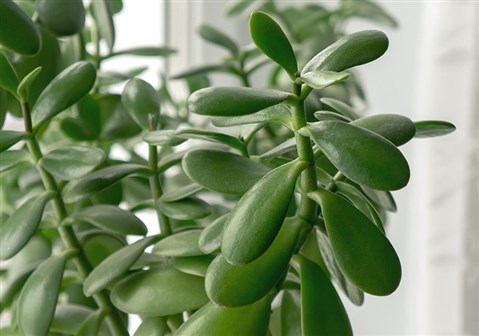
Distinguished from other flower types by its scent, appearance, and care, the money plant is best known for the following characteristics:
- The famous flower is native to South Africa.
- It is also quite famous in Far Eastern countries.
- It starts to flower approximately 4 years after planting.
- The bulb resembles a tree and is usually woven in shape.
- It is used in decorating homes or offices.
Besides this, there are many other stories about him.
Where should a money plant be placed at home?
If you're wondering, " Where should I place a money plant in my home?" , you should know that it's a sun-loving plant. This plant doesn't like cold environments, so the room temperature should never fall below 15 degrees Celsius. Therefore, sunny window sills are perfect for it.
On the other hand, since it's one of the flowers that doesn't like wind, you need to use draft-free areas of the room. If it's exposed to direct strong winds, its growth will be negatively affected, so you can place it in a sunny but wind-free spot.
What is another name for the Money Flower?
The money plant, also known as the lucky flower, has a total of 77 known varieties worldwide. Although it has different names according to botanical science, it is popularly known as the flower of abundance, wealth, luck, and jade. Some of these special flowers cannot be grown indoors, and their most well-known scientific names are Crassula Ovata, Crassula David, Campfire, Crassula Succulent, Crassula Spanning, and Crassula Hobbit.
Paylaş: