
Plant Care - Bonsai
Plant Care - Bonsai
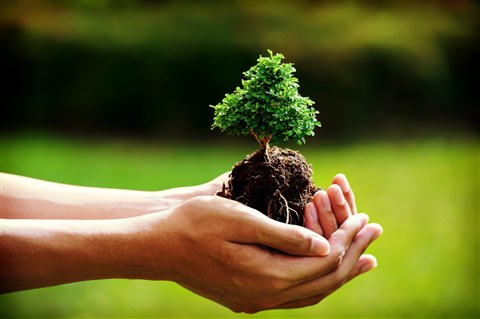
- What is Bonsai?
Bonsai is not just a type of plant, but an art form that expresses respect for living trees. The word "bon" means pot or plate, while "sai" means tree. In fact, bonsai can be described as a tree in a pot. Looking at the history of bonsai cultivation, we can find many legends and different pieces of information. However, the Japanese have definitely given bonsai cultivation an artistic dimension. Many tree species can take the form of bonsai. Its philosophy is related to the way to find one's place within the life cycle, growth and development, and bonsai also depicts the harmony between humanity and paradise. Because these plants are described as a green ladder leading to paradise. With their many different varieties and forms, bonsai can transform your living spaces into a peaceful area.
- What to Consider When Buying?
First, determine where you will keep the plant. Light levels and ambient temperature are key factors. If you have no prior experience with bonsai, start with easier-to-care-for species. For indoor use, you can choose cypress, Chinese elm, jade, boxwood, and ficus. For outdoor use, maple and zelkova are also easy-to-care-for species. If you are experienced and confident in your care, you can also choose species that require more attention and care, such as pine, beech, oak, and dogwood. Based on all this information, make sure you choose the bonsai species that best suits you and never rush into its care or pruning. Remember, bonsai is an art that expresses respect for living trees. Think about how you want your tree to look in the next 5-10 years and act accordingly. Bonsai is also a wonderful gift option for the people who have contributed to its life cycle.
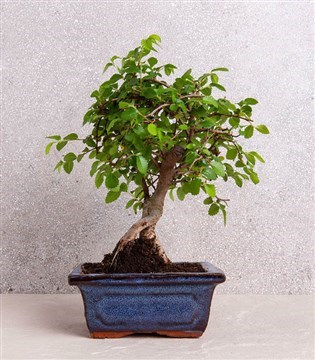
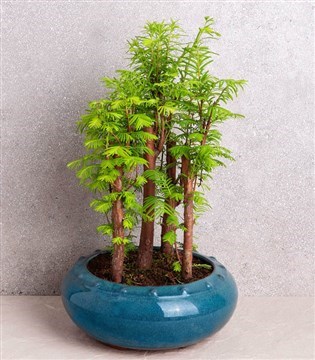
Bonsai and Different Plant Types
- How to Water?
The most important aspect of bonsai care is watering. You need to regularly check your tree's leaves, soil, and the saucer. It's important to water before the soil dries out completely (the top 1 cm of soil being dry indicates it's time to water) and without leaving too much water in the saucer. While watering the soil from above, continue to spray water on the leaves as well.
- How Should Light and Heat Be?
For indoor trees: Unless you have a bonsai that particularly prefers shade, make sure it receives plenty of light during the day. Prefer locations as close to a window as possible. However, ensure it's not directly exposed to drafts, as this will cause it to dry out quickly. If it only receives light from one side, changing its position every few weeks will ensure it receives an even amount of sunlight. Remember that environments colder than 12-13 degrees Celsius are not suitable for bonsai trees. However, don't keep them too close to radiators either.
- How should pruning be done?
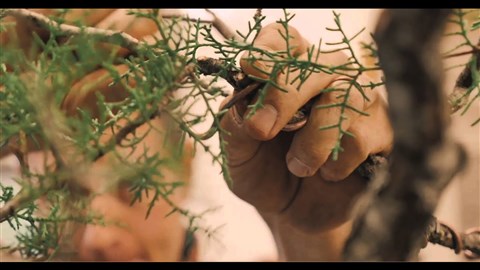
Pinching: Pinching refers to removing new shoots to control the growth of a bonsai tree. Since new shoots are delicate, you can easily remove them with your hands.
Maintenance Pruning: This is a type of pruning performed annually or every two years on the main branches that are being shaped. This ensures that the bonsai's shaping is controlled.
Shaping Pruning : This type of pruning is done quite severely to give the tree its basic shape while it is still young.
- How should repotting and soil change be done?
To avoid damaging the roots and to ensure the soil separates easily during repotting, make sure the soil is dry. Frequent soil changes can cause adaptation problems for the plant, but changing the soil every 2-3 years is recommended.
Paylaş: