
Peony Flower: Meaning, Care, and Story
Short answer
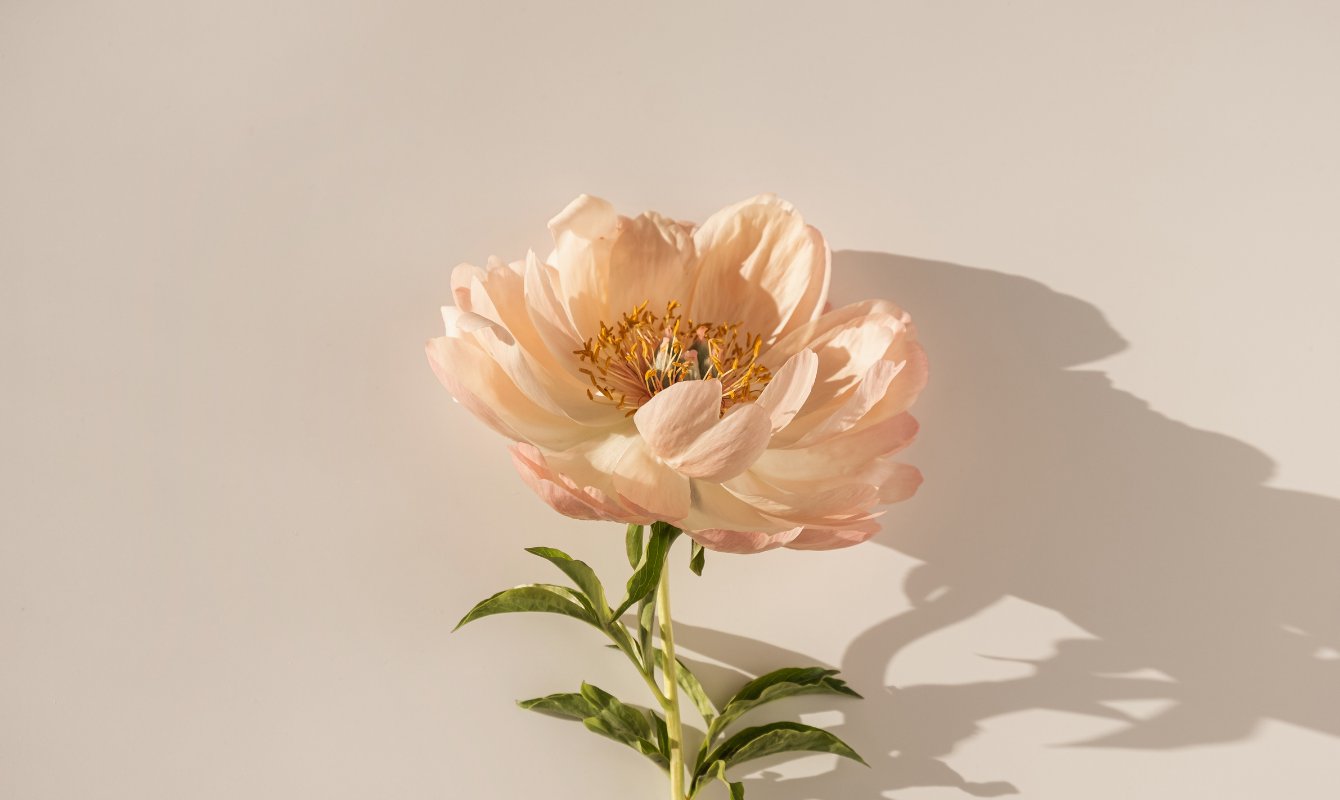
Peony (Paeonia) is a perennial plant, the only genus in the family Paeoniaceae, with approximately 37 species recognized worldwide. In Turkey, 9 species and 11 taxa occur naturally; in Anatolia, it is known colloquially as bear rose , bocur , and mountain rose . In gardens, it blooms between late spring and early summer, usually May–June in Istanbul conditions, and each plant remains in bloom for only 7–14 days.
Although its meaning varies across cultures, the common theme is the same: abundance, longevity, and elegance. Cut peonies last an average of 5–10 days in a vase ; branches cut at the correct bud stage, with daily water changes, and kept in a cool room can last up to 14 days. The most common mistake is here: gathering the buds too tightly and placing the vase in a sunny window.
The peony is the flower with the shortest season but the highest expectations in floriculture. It is in its full form for only a few weeks of the year; when it blooms, its voluminous, layered form, unlike any other flower, transforms the atmosphere of the entire room. Therefore, the information circulating about peonies is equally confusing: it's said that ants make the bud open, it's claimed that it lasts two weeks in a vase, and no one explains why it doesn't bloom on the Mediterranean coast.
This guide was created by juxtaposing the practice of a peony workshop in Istanbul since 2014 with international horticultural science resources. Below you will find information that will truly make both the peonies in your garden and your cut peony arrangements last longer — clearly highlighting which common misconceptions are being addressed.
Scientific name
Paeonia L. (family Paeoniaceae, order Saxifragales)
Other names
Peony (English), pivoine (French); in Anatolia, it is known as ayı gülü, bocur, dağ gülü, orman gülü, kan çiçeği, kame, tombak.
Number of species
Approximately 37 species worldwide; 9 species / 11 taxa in Türkiye.
Main groups
Herbal peonies, tree peonies (Paeonia × suffruticosa), Itoh (intersectional) hybrids
Blooming
Late spring – early summer; 7–14 days per plant.
Lighting requirements
At least 6 hours of direct sun exposure per day.
Need for chilling
At least 6 weeks below 4°C (approximately 480–1,050 hours depending on the variety)
Planting depth
In herbaceous species, the buds are 2.5–5 cm deep; in grafted tree peonies, the grafting point is 15 cm deep.
Plant life
Typically 20–50 years; examples exceeding 100 years are known.
Vase life
On average 5–10 days, up to 14 days under ideal conditions.
Pet safety
According to the ASPCA, it is toxic to cats, dogs, and horses (active ingredient: paeonol).
What is a Peony Flower? Botanical Identity
Peonies are perennial plants in the genus Paeonia . The Kew Botanic Gardens' world plant list, POWO, recognizes 37 accepted species in the genus; sources indicate this number varies between 30 and 40. The genus's natural range extends from Central and Southern Europe to temperate Asia, Northwest Africa, and Western North America, as far as northwestern Mexico.
The botanical position of the peony is one of the most confusing aspects between old and new sources. It was once classified within the buttercup family (Ranunculaceae); today, it is the sole genus in its own family, Paeoniaceae, which belongs to the order Saxifragales. Therefore, the peony's closest garden relative is not the rose, but the saxifrage.
What does "Peony" mean in Turkish? What are the equivalents between the terms?
This is one of the most confusing things when searching for flowers online. The short answer: peony and peony are the names for the same flower in both languages. The genus name, Paeonia , remains the same in both languages.
| Term | Language / context | Notes |
|---|---|---|
| Peony | Turkish (common name) | It is used for both native wild species and garden/cutting varieties. |
| Peony | English | The standard name in the international flower trade; this is what is written on imported boxes. |
| Paeonia | Latin (scientific) | The genus name appears as Paeonia lactiflora on variety labels. |
| Pivoine | French | This can be seen in supply documents originating from the Netherlands and France. |
| Bear rose, wild rose, mountain rose | Anatolian folk names | Generally for wild species; it varies depending on the region. |
Practical conclusion: "Peony bouquet" and "peony bouquet" are the same product. When ordering in Türkiye, searching for "peony" when looking for inspiration in images from abroad will make things easier.

Peony Species: Herbaceous, Tree, and Itoh Peony
If many care recommendations turn out to be wrong, it's usually because peonies aren't a single plant. There are three distinct groups, and almost every rule, from pruning to planting depth, differs between the groups. The Royal Horticultural Society (RHS) also officially uses this three-part distinction.
| Feature | Otsu peony | Tree peony | Itoh (intersectional) |
|---|---|---|---|
| Structure | The surface of the soil dries out completely in winter. | Woody; only the trunk remains in winter. | Semi-woody, semi-herbaceous |
| Size | 60–100 cm | 1–2 m | Approximately 75 cm |
| Flower diameter | 10–20 cm | 15–25 cm | Up to 20 cm |
| Support bar | It is required in layered varieties. | It's not necessary | It's not necessary |
| Planting depth | The eyes are 2.5–5 cm deep. | The grafting point is 15 cm deep. | About 5 cm deeper than the grass. |
| Autumn pruning | It is cut at ground level. | It is not cut ; only the dry branch is removed. | The herbaceous parts are cut off. |
| Settlement period | 2-3 years | Up to 4 years | 2-3 years |
| Suitability for cut flowers | High (commercial standard) | Low (short vase life) | Middle |
You can scroll the table to see all the columns.
Almost all cut peonies you see in floriculture are products of the herbaceous group , specifically varieties originating from Paeonia lactiflora . Classic powder pink varieties like 'Sarah Bernhardt' belong to this group and form the backbone of the world cut flower trade.
A common misconception about tree peonies.
A common misconception is that the tree peony is a single wild species called Paeonia suffruticosa .
Actually, the tree peony is a hybrid complex formed by crossbreeding multiple wild species; its correct spelling is Paeonia × suffruticosa . A 2014 study by the Royal Society genetically demonstrated that this group, known as the "king of flowers" in China, has multiple species origins.
Itoh hybrids are the most romantic story in peony breeding. Japanese breeder Toichi Itoh succeeded in hybridizing herbaceous peonies with tree peonies in 1948 after nearly 20,000 trials — but he died in 1956 before the plants bloomed. The first registered varieties, 'Yellow Crown', only appeared on the market in 1974. Today, Itoh hybrids are the most sought-after group among gardeners because they combine the easy care of herbaceous peonies with the color variety of tree peonies.
Native Peonies of Türkiye: Bear Rose and its Relatives
The impression that the peony is an "imported and exotic" flower is completely wrong. Anatolia is one of the richest natural distribution areas for the peony genus in the world. According to the work of the Atatürk Horticultural Research Institute, affiliated with the Ministry of Agriculture and Forestry, there are 9 species and 11 taxa in the Turkish flora; 54 populations have been identified in the altitude range of 500–2,500 meters.
| Type | Spread / note |
|---|---|
| Paeonia mascula | Widely distributed; the subspecies bodurii is endemic to Turkey. |
| Paeonia peregrina | Thrace and Western Anatolia; a species commonly known as "bear rose" among the people. |
| Paeonia daurica | Northern and Southern Türkiye; eight subspecies identified. |
| Paeonia arietina | Northern Anatolia; the arasicola subspecies is considered endemic. |
| Paeonia kesrouanensis | Distribution shared with Southern Anatolia, Lebanon and Syria. |
| Paeonia turcica | The Antalya–Burdur–Denizli line; endemic species in Turkish literature, controversial according to KOW. |
| Paeonia × kayae | Natural hybrid; endemic to Türkiye. |
Taxonomic transparency note
Paeonia turcica is considered a valid endemic species in Turkish flora literature (Davis & Cullen, 1965). However, the Kew Botanic Gardens POWO database lists it as a synonym of P. kesrouanensis . We have chosen to state both views in this guide; the differing species numbers you see online largely stem from this dispute.
Wild peonies should not be picked.
In April and May, wild peonies bloom in many locations along the Lycian Way, from the foothills of Uludağ to the ridges of Çanakkale and the forests of Kocaeli. These populations are monitored by nature conservation teams, and according to press reports, picking them is subject to administrative fines. The wild peony is a seed bank: breaking off a branch directly reduces the population's chances of reproduction that year.
If you need peonies as cut flowers, the right way is to source certified varieties grown from cultivated stock. All peonies used at the Ribbon Flowers workshop are cultivated; no plants collected from the wild are used.
Seasonal Collection: Browse all peony designs. Over 60 designs in boxes, vases, and bouquets. →
Meaning of Peony Flower
The meaning of the peony varies depending on the region where it grows, but it all comes down to the same thing: abundance, continuity, and grace. In East Asian tradition, it is associated with prosperity and nobility, while in Western floral language, it is associated with romantic devotion and shy delicacy. This dual heritage makes the peony both a flower of celebration and a flower of love.
The most commonly accepted meanings of peony are:
- Abundance and prosperity — a direct visual representation of its voluminous, full form.
- Long-lasting commitment — symbolism derived from the fact that, under the right conditions, it blooms in the same place for decades.
- Elegance and refinement — the qualities most frequently attributed in the language of flowers.
- Honor and prestige — a status symbol stemming from imperial gardens in Chinese tradition.
- New beginnings — the flowering calendar marking the end of spring and the beginning of summer.
Transparency note
The notion that the peony is the "flower of the 12th wedding anniversary" is widely repeated in floristry; however, there is no academic or institutional source to corroborate this attribution. Peonies are certainly a very fitting choice as an anniversary gift — considering it a tradition is more accurate than a strict rule.
Meanings of Peonies According to Their Colors
Your relationship with the person you're sending the peonies to is the most practical guide in choosing the color. The table below shows both the classic floral language and which colors are most often chosen for which occasions in the workshop.
| Colour | Meaning | The most suitable situation |
|---|---|---|
| Pink | Romantic love, tenderness, tenderness | Anniversary, to a loved one, Mother's Day, engagement |
| Powder pink | Elegant simplicity, mature love. | Wedding, engagement, corporate gift, colleague |
| White | Purity, new beginning, apology | Bridal bouquet, birth bouquet, condolence bouquet, apology bouquet |
| Coral / salmon | Passion, vitality, success | Promotion, opening ceremony, birthday celebration |
| Red | Strong love, honor, prosperity | Marriage proposal, Valentine's Day |
| Purple / lilac | Nobility, splendor, respect | A corporate gesture, to a person of respect. |
| Yellow | Joy, friendship, renewal | Get well soon, friend, to your new home. |
Does the smell change depending on the color?
Yes, but it depends more on the variety than the color. The general trend is that pink and white double varieties give off a light, sweet, rose-lemon floral scent. Coral and red tones generally have a more intense, slightly spicy fragrance. Some hybrid varieties are almost odorless. If you want an arrangement with a strong scent, writing this in your order notes will allow the workshop to guide the variety selection.
 Clara Mini Pink Peony in a Box · in a box · mini size
 7 White Peonies in a Grey Box White · in box · 7 stems
 Coral & powder-toned designs. See the Pink Peony collection.
When do peonies bloom? Turkish Calendar
Peonies bloom from late spring to early summer. According to the Missouri Botanical Garden , a plant's flowers last about 7–10 days , while NC State Extension says a plant remains in bloom for about 2 weeks in total. So what we call "peony season" is surprisingly short for a single plant.
The only way to extend the season in the garden is to shift varieties: planting early, mid, and late-season varieties together can extend the flowering period by up to 6–8 weeks, according to UConn Extension.
| Area | Flowering in the garden | Planting season | Cold situation |
|---|---|---|---|
| Marmara (Istanbul, Bursa) | May – early June | September – October | Usually sufficient |
| Central Anatolia (Ankara, Konya) | Late May – June | September – October | More than enough. |
| Black Sea (Trabzon, Kastamonu) | May – June | September – October | Sufficient; drainage is critical. |
| Eastern Anatolia (Erzurum, Van) | June – early July | Late August – September | More than enough. |
| Aegean coast (Izmir, Aydin) | Late April – May | October – November | At the border; variety selection is important. |
| Mediterranean coast (Antalya, Mersin) | Uncertain / most types of dilemmas | November | Generally inadequate |
You can scroll the table to see all the columns.
Why don't peonies bloom on the Mediterranean coast?
This is the number one reason for peony failures in Turkey, and it's almost never explained in Turkish-language resources. The problem isn't the soil or irrigation, but the need for chilling .
Peonies need a certain amount of cold during the winter to develop their flower buds. UConn Extension gives this threshold as at least 6 weeks below 4.4°C ; Virginia Tech defines the effective range as 0–5°C and states that it is needed for 2–3 months in open ground. A study conducted in Korea showed that 0°C is approximately 1.4 times more effective than 5°C and 2.5 times more effective than 10°C. Therefore, a mild winter, even if prolonged, is not sufficient.
Along the Mediterranean coast, this threshold is often not met; the plant sprouts leaves, looks robust, but does not flower. There are three things that can be tried in warmer regions:
- Shallower planting. NC State recommends that crowns be planted no more than 2.5 cm deep in zones 7–8.
- Do not use winter mulch. Mulch further reduces the need for cold by preventing the soil from cooling.
- Choose a variety that requires low chilling. Some tree peony and Itoh hybrids are more tolerant of mild winters than herbaceous varieties.
Cutting peonies season is a separate matter.
A garden calendar and a florist's window display are not the same thing. Cut peonies have a significantly longer season than garden peonies because they can be stored for weeks in dry cold storage and are sourced from different hemispheres. Out of season, the variety of designs and stock are limited; you can check the peony category for current availability or confirm via WhatsApp before ordering flowers .
Guide to Extending the Vase Life of Cut Peonies
This section is the most practical part of the guide — and the least readily available information in Turkish online. The honest answer to the question of how long cut peonies last in a vase is: an average of 5–10 days.
A comprehensive study of 68 varieties in Alaska measured the average vase life at 8.6 days (ranging from 4–14 days) one year and 6.0 days the following year. The classic 'Sarah Bernhardt' variety yielded 6.1 days. A notable finding from the same study was that 'Sarah Bernhardt' branches cooled to around 1°C for a week showed an increase in vase life from 8.4 days to 14.2 days. In other words, coolness is not a luxury for peonies, but rather a lifespan extender.
A common misconception is "Peonies last 14 days in a vase."
Actually, 14 days is the upper limit, not the average. A realistic expectation is 5-10 days. Three things determine this number: the slaughtering process, room temperature, and water cleanliness.
Correct bud stage: "marshmallow" test
Whether a peony will bloom in a vase is determined before you bring it home. The ideal harvesting stage, as defined by the American Peony Society, is the soft bud stage: when you gently press the center of the bud, it should feel like a fresh marshmallow .
A 2022 scientific study clearly demonstrated why this is important: branches cut at the soft bud stage had a 100% opening rate and a vase life of approximately 7.6 days, while branches cut at the overly firm bud stage had an opening rate of only 40–80% . In other words, a firm bud doesn't mean "fresher," but rather "may not open at all."
Step by step: from the moment you receive it
- First 30 minutes: Open the package, release the branches . Open the box or packaging immediately. Peonies tire quickly in cramped and warm environments. Release the branches and allow air circulation.
- Trim the stems back to the fresh tissue. Stem ends dry out during transport and stop absorbing water. Cut 2–3 cm at a 45-degree angle with sharp scissors. Cross-cutting increases the contact surface and prevents the stem from sitting flat on the vase base.
- Remove any leaves that will be submerged. Every leaf left underwater provides a breeding ground for bacteria. Cloudy water is the quickest way to shorten the vase's lifespan.
- Use lukewarm water (around 38–40°C), not ice-cold. The University of Vermont's cut flower guide recommends lukewarm water to speed up the process of rehydrating tired stems. Surprisingly, this is the initial trigger for peony buds to open.
- Use flower food . Don't throw away the nutrient sachet that came with the package. Studies show that carbohydrate (sugar)-containing nutrients improve the flowering rate in peonies and extend their vase life by 1–2 days. If you don't have a nutrient sachet, fresh water + daily watering is the safest alternative.
- Place it in a cool, draft-free spot. Direct sunlight, radiators, television tops, fireplaces, and air conditioning drafts — all five are enemies of peonies. Moving the vase to the coolest room in the house at night will significantly prolong its life.
- Change the water every two days, or daily during the summer months. In Istanbul's summer, room temperature accelerates bacterial growth; therefore, daily watering is necessary during the hot months. Trim the stems by 1 cm with each watering.
- Remove wilting flowers. A wilted flower accelerates the aging of the rest of the arrangement. Removing them preserves both the appearance and the lifespan of the arrangement.
The way to make a bud that hasn't opened, open.
If your buds arrive tight and aren't opening, the solution is clear: trim the stem back to fresh tissue, place in warm water , and let the vase sit in a cool, draft-free room. This is exactly the protocol the American Peony Society provides for flowers coming out of storage; sugar-based flower food will speed up this process. You'll usually see movement within 12–36 hours.
Don't do it.
Trying to open the bud with your finger will permanently crush the petals, and the flower will never take on a proper form. Spraying with hot water, using a hairdryer, or shaking the bud will also not work; none of these have a scientific basis.
The ethylene issue: the most misrepresented topic.
A common misconception is that "Peonies are very sensitive to ethylene and must be treated with ethylene blockers (1-MCP, STS)."
Actually, peonies are not among the classic "highly ethylene-sensitive" flowers like carnations or chrysanthemums. A study published in Acta Horticulturae showed that ethylene antagonists did not extend vase life; branches treated with 1-MCP had the shortest vase life. A 2025 review indicates that ethylene response is variety-specific: some varieties are sensitive, others are almost unresponsive. Nevertheless, it is still a good practice to avoid leaving the vase near ripe fruit (especially bananas and apples).
Storing peonies days in advance: dry cold storage
If you need to procure peonies in advance for a wedding, engagement, or special occasion, the professional method is dry cold storage : the branches are wrapped in newspaper/kraft paper and kept upright in a cold place without being placed in water.
| Condition | Heat | Expected time |
|---|---|---|
| Professional cold storage (dry) | 0 °C | 2–3 weeks, longer in some varieties. |
| Commercial long-term storage | -0.6 °C | Up to 16 weeks |
| Household refrigerator (vegetable drawer) | 2–4 °C | Significantly shorter; a few days. |
| Water (wet) storage | Any | Less than a week; the bud continues to develop. |
Practical conclusion: soaking peonies in water is not preservation. Storing them in a home refrigerator is a partial solution and they should be kept away from pungent foods. If you are planning on having peonies for a specific date, the safest approach is to schedule the delivery date directly with the workshop.
Ants: harmless, even beneficial.
Common misconceptions include "Ants tickle buds to make them open" or the opposite: "Ants are harmful, you need to use pesticides."
Actually, both are wrong. Ants are attracted to the extrafloral nectaries on the surface of the bud and sepals; the secretion there contains sucrose, glucose, fructose, and amino acids. Penn State, Missouri, and Illinois Extension all consider the idea that peonies need ants to bloom to be a myth . Ants don't harm the plant, insecticides aren't needed; in fact, they indirectly benefit it by deterring flower-eating insects like thrips.
If you're cutting a peony from the garden and bringing it inside: turn the stem upside down and gently shake it, or immerse the bud in water for a few seconds. The ants will leave on their own.
Don't miss peony season!
We deliver to all 39 districts of Istanbul with our own courier team. Same-day delivery is available for orders placed before 2 PM; for Beşiktaş, Şişli, Sarıyer, Beyoğlu, and Kağıthane, this time is 4 PM.
Peony Care in the Garden and in Pots
The peony's reputation in the garden is well-deserved: once planted in the right spot, it can survive almost on its own for decades. As the University of Missouri Extension puts it, the peony "thrives with neglect." But that "right place" and "right depth" are non-negotiable.
Light and location
It needs at least 6 hours of direct sunlight per day. It can tolerate partial shade, but the number of flowers will decrease, the stems will grow longer and droop, and the risk of fungal diseases will increase. Do not plant it under trees, in the shade of shrubs, or in corners with poor air circulation. Since moving a well-established peony takes years, choosing the right location from the start is the most critical decision.
Soil
The only real enemy of the peony is stagnant water . It prefers well-drained, organic matter-rich soils ranging from neutral to slightly alkaline. In heavy clay soils, it is necessary to create a raised bed before planting or improve drainage with perlite/coarse sand. If growing in a pot, choose a deep pot: the peony root does not spread, it goes down. 40 cm depth is a practical lower limit, and a drainage hole is essential.
Planting depth: the most critical detail.
A one-centimeter error means years of no flowering.
In herbaceous peonies, the eyes (shoot buds) should be 2.5–5 cm below the soil surface. Iowa State, Wisconsin–Madison, and the University of Missouri all confirm this threshold and clearly state the result of planting too deep: abundant foliage, no flowers. In warmer regions (zones 7–8), NC State recommends keeping this depth at a maximum of 2.5 cm.
The rule is reversed for grafted tree peonies: the RHS recommends that the grafting point be 15 cm below soil level; this allows the plant to establish its own root system and not produce basal shoots from the rootstock. Applying the rule for herbaceous peonies to tree peonies is one of the most common gardening mistakes.
Irrigation
Established peonies are surprisingly drought-tolerant. The rule: infrequent but deep watering. Water when the top 3–4 cm of soil is dry; each time, give enough water to reach the root zone. Frequency increases during summer heat, and practically stops in winter when the above-ground parts of the soil dry out.
Always irrigate the soil . Foliar wetting from above creates the ideal environment for gray mold (Botrytis). The Pacific Northwest plant disease manual is very clear on this: "Reducing wetness on the plant is the most important control tactic."
Fertilization
Peonies require little fertilizer; too much is harmful. Nitrogen-heavy fertilizers promote leaf growth, not flower production. After shoots emerge in spring, apply a phosphorus and potassium-rich fertilizer around the root zone—avoiding the stem. A second, lighter application after flowering will nourish next year's buds. Do not apply fresh animal manure directly to the root collar; it increases the risk of decay.
Pruning and preparing for winter.
- Remove faded (deadheading) flowers . This prevents seed setting, diverting energy to the roots.
- For herbaceous peonies: in autumn, when the leaves are completely dry, cut the stems at ground level. Do not compost the cut material, discard it — Botrytis spores overwinter there.
- Regarding tree peonies: do not prune in the autumn. Only remove dead and crossing branches.
- Support for double-flowered varieties: The flowers become heavy and may lie down with rain. Install ring supports when the shoots are 30–40 cm tall; it will be too late to install them after flowering.
- Winter mulch: Beneficial in the first year in cold regions, but should be removed in spring when shoots emerge. Not recommended in warm regions as it reduces the required chilling time.
Propagation and first flowering
The most reliable method of propagating peonies is root division , and the best time to do this is in the fall. The American Peony Society recommends that each divided piece have 3–5 buds ; smaller pieces will take longer than two years to flower. Propagation from seed takes 4–5 years to mature, according to Iowa State, and will not give the same characteristics as the parent plant.
There's a saying among gardeners for this: "sleep, creep, leap" — it sleeps the first year, walks the second, and leaps the third. If your newly planted peony doesn't bloom the first year, it's not a problem, it's just the calendar.
Why Don't Peonies Bloom? Diagnostic Chart
"The plant is healthy, the leaves are lush, but there are no flowers." This is the most common complaint about peonies, and the reason is almost always one of the following six points.
| From where | Symptom | Solution |
|---|---|---|
| Planting too deeply | Plenty of leaves, no buds; it's been the same for years. | Remove in the fall and reattach so that the eyes are 2.5–5 cm deep. |
| Insufficient chilling | In this region with mild winters, there are leaves but no buds. | Shallow planting, no winter mulching, and selection of varieties requiring low chilling. |
| Insufficient light | The stems are long and prostrate, with few small buds. | Move it to a location that receives 6+ hours of sunlight per day in the fall. |
| Excess nitrogen | Dark green, very lush leaves; no flowers. | Eliminate nitrogen fertilizers and switch to phosphorus-potassium based fertilizers. |
| The plant is not yet mature. | Newly planted or divided; 1–2 years old. | Wait; 3-5 cell plots will reach full productivity in 2-3 years. |
| Bud blast | The buds grow to the size of peas, then turn black and fall off. | See the section below; there may be more than one reason. |
You can scroll the table to see all the columns.
What is bud blast?
According to the Missouri Botanical Garden: the buds reach the size of a pea , then stop developing, turn red, brown, and fall off. There are four main reasons:
- Botrytis infection — if you see gray, velvety-looking mold on the bud, that's what it's caused by.
- Late spring frost — no mildew; the buds suddenly turn black. Using a cover on frosty nights provides protection.
- Insufficient sunlight, poor nutrition, or spring drought — the plant cannot carry a bud and drops it.
- The plant being immature — this is normal for newly planted plants in the first 1-2 years.
Rarely, thrips damage also leads to bud deformation; in this case, the shape distortion is observed before the bud blackens.
Peony Diseases and Pests
Peonies are hardy plants; most diseases are not fatal, only cosmetic. But one — Botrytis — is a real threat, and prevention is easier than treatment.
| Illness | Active | Symptoms | Cultural struggle |
|---|---|---|---|
| Gray mold (peony wilt) | Botrytis paeoniae , B. cinerea | Discoloration and toppling at ground level in young shoots; velvety grey mold on buds; large dark brown spots on leaves. | Reduce moisture on the plant: bottom watering, spacing, removing mulch in spring. Immediately remove and discard infected parts (do not compost). |
| Leaf spot ("measles", red spot) | Graphiopsis chlorocephala (formerly Cladosporium paeoniae ) | Small reddish-purple spots on the leaves, then bright dark purple plates; purple stripes on the stem. | It won't kill the plant; it's a cosmetic product. Remove all plant debris in the fall. |
| Powdery mildew | Erysiphe spp. | A layer of white powder on the leaves; usually at the end of the season. | Provide sunlight and air circulation; remove diseased leaves in the fall. |
| Root and stem rot | Phytophthora cactorum | The stem darkens and collapses at ground level; the buds and leaves are dark and leathery. | Improve drainage. The pathogen survives in the soil for a long time; in severe cases, remove the plant along with the surrounding soil. |
| Thrips | Thysanoptera | Bud deformation, silvery scratches on petals. | It is generally below the economic damage threshold; targeted intervention in severe cases. |
| Ants | — | Intense ant activity on the buds. | It is not harmful and requires no intervention. They come for the nectar. |
You can scroll the table to see all the columns.
Before resorting to chemical control, know this: most peony diseases can be solved with cultural measures . Autumn pruning, groundwatering, and spacing between plants are more effective than even the most expensive fungicides. If you need to use pesticides, be sure to check the dosage on the label and whether it is licensed for that product in Turkey.
Are Peonies Poisonous? Pet and Child Safety.
This question is hardly answered in any Turkish-language resources, yet it's important for anyone who lives with a cat or dog.
For pets: The ASPCA (American Society for the Prevention of Cruelty to Animals) lists peony as toxic to cats, dogs, and horses . The active ingredient is paeonol , and clinical signs include vomiting, diarrhea, and lethargy . The root is the most concentrated part of the plant.
For humans: Peonies are not on the list of acutely poisonous ornamental plants. However, in Turkey, the scientific opinion of the General Directorate of Food and Control of the Ministry of Agriculture and Forestry states that the root of Paeonia lactiflora is not suitable for use as food and recommends that the plant be negatively listed in the food supplement list.
Practical advice
Do not eat peonies, make tea from them, or use the roots or petals as food. If you have cats, dogs, or young children in your home, keep the vase out of their reach; collect any fallen petals. If your pet has eaten peonies and develops vomiting or diarrhea, contact your veterinarian, telling them the name of the plant.
Why are peonies so expensive? Price ranges.
Peonies are not priced the same as roses or carnations; they are one of the most expensive items in the cut flower market. The reasons are not economic, but biological:
- Very short harvest window. A plant flowers for only 7–14 days a year. A grower can harvest from a field they've maintained year-round in two weeks.
- Slow return on investment. Planted roots don't yield commercial results for 2-3 years; production from seed takes 4-5 years.
- One flower, one stem. While a rose stem may have multiple buds, peonies typically have only one showy flower per stem. A 20-stem arrangement means 20 separate stems.
- Cold chain requirement. Because its shelf life is extremely sensitive to temperature, all storage and transportation must be carried out under controlled cold conditions.
- Off-season imports. When the gardening season ends, supplies come from different hemispheres; logistics costs are reflected in the price.
- Fragility and loss. The petals are very delicate; the loss rate during preparation is higher than in other flowers.
| Design type | Approximate number of branches | Price range |
|---|---|---|
| Mini box/mini vase arrangement | 3-5 branches | 5,995 – 6,995 TL |
| Classic bouquet | 5–10 branches | 9,295 – 13,995 TL |
| Arrangement in a box | 7 branches or more | 11,995 – 15,995 TL |
| Arrangement in a vase | 6–12 branches | 6,995 – 18,995 TL |
| bridal bouquet | 5–11 sprigs (mixed) | 11,995 – 23,995 TL |
| Deluxe bouquet/arrangement | 20–30 branches | 26,995 – 43,995 TL |
| Royal Deluxe | 50–101 branches | 49,995 – 119,995 TL |
| Empire collection | 201 stems and above | Starting from 239,995 TL |
You can scroll the table to see all the columns.
Peony prices vary depending on the season and supply; the most accurate information is always the current price on the product page. A practical tip if you want to use your budget efficiently: a combination of a small number of peonies plus voluminous complementary flowers (hydrangea, delphinium, lisianthus) will give the same visual effect significantly more economically.
The Story of the Peony: From Mythology to the Present Day
Origin of the name
The genus name Paeonia is derived from Paeon , the physician in Greek mythology. According to the most common account, Paeon was a student of the god of medicine, Asclepius, and was so talented that he aroused his teacher's jealousy; a god transformed him into a flower to protect him.
Source integrity
The details of the legend contradict each other in the sources: in some accounts, it is Zeus who transforms Paeon, in others, Pluto; and the versions involving Leto and Apollo are based more on 19th–20th-century horticultural literature than on ancient primary texts. Therefore, we do not present any single account as "true".
China: "The king of flowers"
According to a history compiled by the University of Michigan Botanical Gardens, wild peonies were cultivated for medicinal purposes in China approximately 2,000 years ago . Their ornamental value was recognized before the 11th century , and the tree peony earned the title "King of Flowers," becoming a symbol of status, nobility, and imperial power. By the 16th century, more than 30 varieties had been named.
A common misconception is that "Peonies are known as the 'queen of flowers' in China."
Actually, it 's "king," not "queen." Both the University of Michigan, the University of Missouri, and the Royal Society's 2014 paper refer to him as "king of flowers."
Anatolia and Europe
In Anatolia, the peony was long known more as a medicinal plant than an ornamental one; one of its folk names , blood flower, refers to this traditional use. In Europe, with the arrival of Paeonia lactiflora varieties of Chinese origin in the 19th century, the peony became central to garden fashion — all the double, voluminous forms we see in flower shops today are a legacy of this breeding wave.
The peony was recognized as Indiana's official state flower in 1957 ; the title had previously belonged to the zinnia from 1931–1957. Today, the peony is one of the three most sought-after flowers for wedding floristry worldwide.

What replaces the peony during the off-season?
Because peony season is short, the question "Is this similar to a peony but available right now?" comes up very often. The flowers below provide a similar volume and layering effect.
| Flower | Similarity | The difference |
|---|---|---|
| arbor/garden rose | Layered, full-bodied; fragrant. | Longer vase life, accessible year-round. |
| Ranunculus | Thin-layered, soft tissue | Smaller flower, shorter stem; winter–spring season |
| Lisianthus | Wrinkled petal texture, pastel tones | Much longer vase life; low volume. |
| Hydrangea | High volume, same "full" effect. | Not a single flower, but a cluster; very sensitive to water. |
| Double tulip | The varieties called "peony tulips" are quite similar. | Spring season; shorter lifespan. |
Most of these flowers can be found in bouquet and vase arrangement categories. Checking with the workshop before ordering to find out which flowers are currently the freshest will ensure you get the best of the season.
Gift Guide: How Many Peony Stems for Which Occasion?
In peonies, the number of branches is the only variable that determines the form. Practical reference:
| Situation | Suggested branch | Proper form |
|---|---|---|
| A gesture to the office/colleague. | 3–5 | Mini box or mini vase |
| Birthday | 7–10 | Arrangement or bouquet in a box |
| Anniversary | 10–20 | Arrangement in a vase |
| Mini bridal bouquet | 5–7 | Handheld compact bouquet |
| Classic bridal bouquet | 8–11 | Peony-dominant, with secondary flowers. |
| Marriage proposal / asking for marriage | 20–30 | Deluxe bouquet or panoramic arrangement |
| Grand celebration, opening, stage | 50+ | Royal Deluxe arrangement |
Workshop tip
A bridal bouquet made entirely of peonies is both the most expensive and the heaviest option. In our experience, a combination of 5-7 peonies plus voluminous flowers creates almost the same effect in photos and is much more comfortable to carry throughout the day.
 Agnes Pink 9 Peony Bouquet for Anniversary and Birthday
 Loretta Deluxe White Peony Arrangement in Vase · Ready Presentation
 Royal Deluxe Pink 50 Peonies for proposals and grand celebrations
Same-day delivery to every district of Istanbul.
We have been designing in our workshop in Etiler since 2014 and delivering with our own courier team. All designs, including peony designs, are made to order and prepared on the same day.
Frequently Asked Questions About Peony Flowers
What does the peony flower symbolize?
Peonies generally symbolize abundance, longevity, grace, and honor. In East Asian tradition, they are associated with prosperity and nobility, while in Western floral terminology, they represent romantic love and delicacy. The meaning changes depending on the color: pink signifies romantic love, white purity and new beginnings, coral passion and success, and purple nobility.
What does "peony" mean in Turkish, and is it the same flower as "kaşayık" (peony)?
Yes, it's the same flower. "Peony" is the English name, "şakayık" is the Turkish name; the scientific genus name is Paeonia in both languages. In French, it's called "pivoine". When ordering in Turkey, searching for "kaynayık" (peony) will yield better results, while when looking for inspiration from international sources, searching for "peony" is more likely.
In which month do peonies bloom?
Peonies bloom between late spring and early summer. In Istanbul and the Marmara region, this is usually May–early June, in Central Anatolia late May–June, and in Eastern Anatolia June–early July. The flowers of a single plant last only 7–14 days; if early, mid, and late varieties are planted together, the flowering period in the garden can be extended to 6–8 weeks.
How many days do cut peonies last in a vase?
On average, 5–10 days. In a study of 68 varieties, the average vase life was measured at 6–8.6 days; under ideal conditions, it can extend up to 14 days. Three factors determine the lifespan: whether the bud was cut at the correct stage, the coolness of the room, and the cleanliness of the water. Placing the vase in the coolest room of the house at night significantly extends its lifespan.
How to make a peony bud that hasn't opened, bloom?
Trim the stem at a 45-degree angle until it reaches the fresh tissue, place it in lukewarm water (approximately 38–40°C), and add flower food containing sugar. Keep the vase in a cool, draft-free room. Opening usually begins within 12–36 hours. Trying to open the bud with your finger will permanently crush the petals; do not attempt this.
Are ants on peony trees harmful?
No, they are not harmful and no spraying is necessary. Ants are attracted to the sugary liquid secreted from the extraflora nectaries on the surface of the bud. The idea that "ants make the bud open" is a myth; Penn State, Missouri, and Illinois Extension explicitly call it false. Ants provide an indirect benefit by deterring pests like thrips. For cut flowers, shaking the stem or briefly immersing the bud in water is sufficient.
Why don't peonies bloom?
The most common causes are: buds planted too deep (deeper than 2.5–5 cm), insufficient chilling in winter, less than 6 hours of sun per day, excessive nitrogen fertilization, immaturity of the plant (normal for newly planted plants for 1–2 years), and bud blindness. If the leaves are lush but there are no flowers, the first thing to check is the planting depth.
Can peonies be grown in pots and at home?
It can be grown in pots, but under certain conditions. A deep pot (at least 40 cm) is necessary, it must have drainage holes, it needs at least 6 hours of direct sunlight per day, and it must be kept cool in winter . Peonies kept in a heated room indoors cannot meet their chilling requirement and will not bloom. Growing them on a balcony or terrace, keeping them outdoors even in winter, is the correct approach.
How to propagate peonies?
A reliable method is root division in the autumn. Each divided piece should have 3–5 buds; smaller pieces will wait more than two years to flower. Propagation from seed takes 4–5 years to mature and does not produce the flowering characteristics of the parent plant. It takes 2–3 years for divided plants to reach full yield.
How long does a peony live?
A peony planted in the right place will usually bloom in the same spot for 20–50 years; examples exceeding 100 years are known. This longevity is also the source of the peony's symbolism of "long-lasting commitment." However, it would not be accurate to say that every peony will live for 100 years.
Are peonies poisonous to cats and dogs?
According to the ASPCA, yes: peonies are toxic to cats, dogs, and horses. The active ingredient is identified as paeonol; symptoms include vomiting, diarrhea, and lethargy. Keep the vase at a height inaccessible to pets and collect any fallen petals. Peonies should also not be eaten by humans; in Türkiye, the Ministry of Agriculture and Forestry does not approve of the use of peony roots as food.
Why are peonies so expensive?
A peony plant flowers for only 7–14 days a year, the planted root does not produce commercial yield for 2–3 years, and usually only one flower is harvested per stem. This is compounded by the need for an uninterrupted cold chain, the cost of off-season imports, and a high loss rate due to the fragility of the petals. At Ribbon Flowers, peony designs start at 5,995 TL for mini arrangements and can exceed 100,000 TL for Royal Deluxe forms.
Sources
- Kew Botanic Gardens – Plants of the World Online: Paeonia L. (number of species, distribution)
- Republic of Turkey Ministry of Agriculture and Forestry, Atatürk Horticultural Research Institute – Peony (Turkish species, populations, common names)
- Royal Horticultural Society – Tree Peony Growing Guide (tree peony planting depth)
- American Peony Society – Harvest, Storage and Transport (soft bud stage, dry storage)
- NC State Extension – Peony Postharvest Handling (cold storage temperatures and durations)
- Alaska Department of Natural Resources / UAF – Post Harvest Handling of Fresh Cut Peonies (Vase life measurements for 68 varieties)
- UConn Home & Garden Education Center – Peonies (chilling period, season extension)
- Virginia Tech Extension – Herbaceous Peony Production (SPES-388) (chilling temperature range)
- Iowa State University Extension – Reasons Why Peonies Fail to Bloom (planting depth)
- Missouri Botanical Garden – Bud-blast of Peony (causes of bud blindness)
- Penn State Extension – Ants on Peonies (ant myth)
- Pacific Northwest Plant Disease Handbook – Peony Botrytis Blight (silver blight control)
- ASPCA – Peony (toxic to dogs, cats, horses) (toxicity)
- Turkish Ministry of Agriculture and Forestry, General Directorate of Nature Conservation and National Parks – Scientific opinion on Paeonia (use as food)
- University of Michigan Botanical Gardens – Peony History (Cultural history in China, "king of flowers")
- Official Indiana State Flower – Indiana State Flower (1957 state flower)
This guide was last updated on August 4, 2026. Price ranges may vary depending on the season; please check product pages for current prices.
Share: